5% OFF
For Seniors, Military, Veterans, and First Responders
Expires 10/31/26.
*For first time customers only. Call for details.

A lot of the most important plumbing work in your home happens out of sight. Whether it’s pulling water up from a private well, pushing wastewater up to the sewer line, or keeping a crawlspace dry after a heavy rain, pumps handle jobs that quietly protect your property every day. When one of them fails, you notice fast.
Prostar Services installs, repairs, and maintains all three types of residential pump systems throughout Wilson and the surrounding area. We’ll diagnose the problem, walk you through your options, and make sure the work is done correctly.
Book Online
Not sure which type of pump applies to your situation? Here’s a quick way to think about it:
Still not sure? Give us a call and we’ll help you figure out exactly what your home needs.
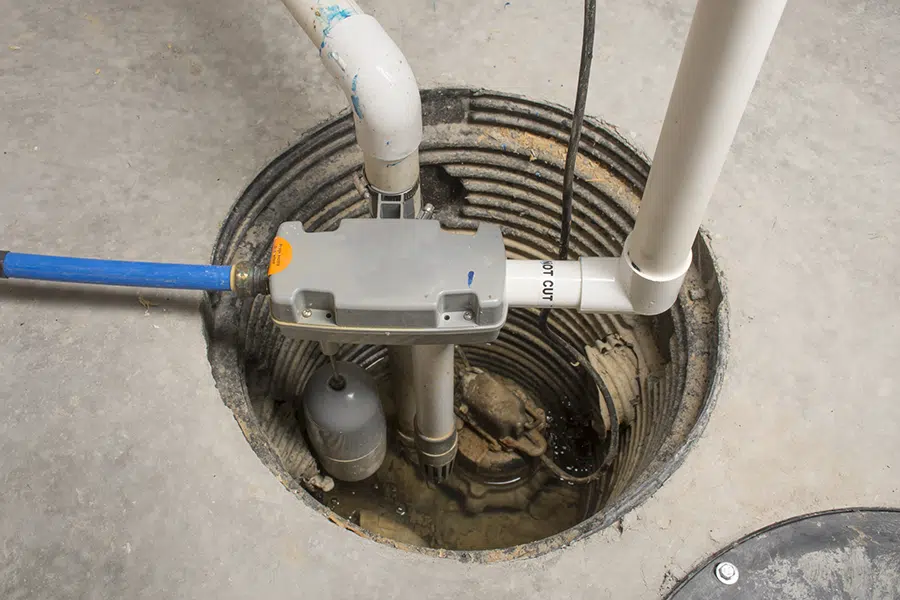
A sump pump sits in a pit at the lowest point of your crawlspace or basement. When water seeps in and collects there, the pump activates automatically, moving it away from your foundation before damage occurs. In Eastern North Carolina, where heavy rainfall is common and the water table sits relatively high in some areas, a functioning sump pump can be the difference between a dry crawlspace and a costly moisture problem.
Your sump pump works quietly in the background, so problems aren’t always obvious until water is already an issue. Call Prostar if you notice any of the following:
Homes on private well systems depend on a well pump to draw water from underground and deliver it at usable pressure throughout the house. Jet pumps are mounted above ground and work best for shallow wells within about 25 feet of the surface. Submersible pumps sit inside the well casing and push water up from below — they’re the standard for deeper wells and tend to last 20 years or more when properly installed. Prostar repairs and maintains both types throughout the Wilson area.

Jamie and Brett did an excellent job of installing my furnace. Very professional .Great job Prostar

Terrance is superior Hvac tech..He is very polite and very efficient and effective...I would rate him on a10 scale. 10

Jamie and Brett were fantastic.

Terrance came out to service my unit and was very polite and informative. He displayed extensive knowledge of the systems and industry and recommended what he felt was necessary. I would definitely recommend requesting him as a technician on your next service.

Jamie and Brett were professional and courteous and so so friendly. They are fabulous team to work with and truly grateful of the A+ service The most I appreciate was he explained the work to my understanding too.

Jamie & Brett did an amazing job on my humidifier

Terrance was very intelligent and knew his job very well and was exceptionally respectful and we'll look forward to seeing him again!!!

Jamie and terrance did a top notch job and will definitely recommend them to others

Jamie and Brett were great installers, highly recommended!!!!!!!!
Jamie and Brett did an excellent job of installing my furnace. Very professional .Great job Prostar
Terrance is superior Hvac tech..He is very polite and very efficient and effective...I would rate him on a10 scale. 10
Jamie and Brett were fantastic.
Terrance came out to service my unit and was very polite and informative. He displayed extensive knowledge of the systems and industry and recommended what he felt was necessary. I would definitely recommend requesting him as a technician on your next service.
Jamie and Brett were professional and courteous and so so friendly. They are fabulous team to work with and truly grateful of the A+ service The most I appreciate was he explained the work to my understanding too.
Jamie & Brett did an amazing job on my humidifier
Terrance was very intelligent and knew his job very well and was exceptionally respectful and we'll look forward to seeing him again!!!
Jamie and terrance did a top notch job and will definitely recommend them to others
Jamie and Brett were great installers, highly recommended!!!!!!!!
Ready to get something scheduled? Call us or book online and we’ll get you sorted ASAP!
Well pump problems can escalate quickly. Call Prostar if you notice any of the following:
Well pump installation isn’t a one-size-fits-all job. The depth of your well, the geology of the area, your household’s water demand, and the condition of your existing well casing all factor into the right choice. We assess your specific situation before recommending a pump type and model. For submersible pump installations, we handle the full process — lowering the pump into the well casing, running the electrical connections, setting the pressure tank, and testing the system under load. Because each well has its own characteristics, we take the time to customize the setup rather than defaulting to a generic approach.
An ejector pump handles wastewater from plumbing fixtures installed below the level of your main sewer or septic line. If your home has a basement bathroom or any below-grade drain, an ejector pump is what moves that waste out. Unlike a sump pump, it’s designed to handle both liquids and solids. It sits in its own sealed, vented pit and activates automatically. Prostar installs, repairs, and maintains ejector pump systems, including float switches, impellers, seals, and full unit replacements.
A correctly installed ejector pump does more than just move waste — it protects your home and expands what’s possible in below-grade spaces:
It depends on your lot and the drainage around your foundation, but many Wilson-area homes with crawlspaces benefit from one. Eastern North Carolina gets significant rainfall, and the region’s flat terrain means water can collect under a home quickly. If you’ve noticed moisture, mold, or musty smells in your crawlspace, a sump pump is worth a conversation.
Age and failure history are the biggest factors. If your pump is over 15 years old and has needed multiple repairs, replacement usually makes more financial sense than another fix. For newer pumps, most issues — pressure switch problems, waterlogged pressure tanks, worn seals — are repairable. We’ll give you an honest assessment of where yours stands.
A sump pump moves groundwater and stormwater out of a crawlspace or basement pit and only handles clean water. An ejector pump handles sewage, moving waste from below-grade bathroom and laundry fixtures up to the main sewer or septic line. They look similar but serve completely different purposes and should never share the same pit.
Most sump pumps have a lifespan of around 10 years with regular use. Pumps in homes that run heavily during wet seasons may wear out sooner. Annual testing and periodic maintenance can extend that lifespan and help catch problems early.
For most Wilson homeowners, yes. Summer thunderstorms here can knock out power at exactly the wrong moment, and a primary sump pump without a backup is useless during an outage. Battery backup units install alongside your existing pump and activate automatically if power goes out or if the primary pump can’t keep up. We can assess your current setup and recommend the right option.
Any plumbing fixture that drains through the ejector system — typically a basement bathroom or lower-level laundry — will stop functioning. Waste can back up into the pit, and if the pit seal fails, it becomes a sanitation problem quickly. It’s one of those repairs where you want a technician out the same day. Avoid using those fixtures until the pump is serviced or replaced.
A pump that’s correctly sized and properly installed protects your home for years without much thought. Prostar Services handles sump pump, well pump, and ejector pump installations throughout Wilson and the surrounding area. We’ll assess your home, recommend the right system, and install it the right way.
Give us a call to get started.
Call Now (252) 285-4050
We’re based in Wilson, but we cover a lot of ground. Take a look and see if we serve your neck of the woods.
 All Service Areas
The Prostar All-Star Membership keeps your HVAC and plumbing running right all year long, with two seasonal tune-ups, a whole-home plumbing inspection, priority scheduling, and 10% off repairs whenever you need them.
It’s the kind of coverage that pays for itself the first time something goes sideways, and the peace of mind that comes with knowing we’ve already checked everything out.
Join Now