

5% OFF
For Seniors, Military, Veterans, and First Responders
Expires 10/31/26.
*For first time customers only. Call for details.
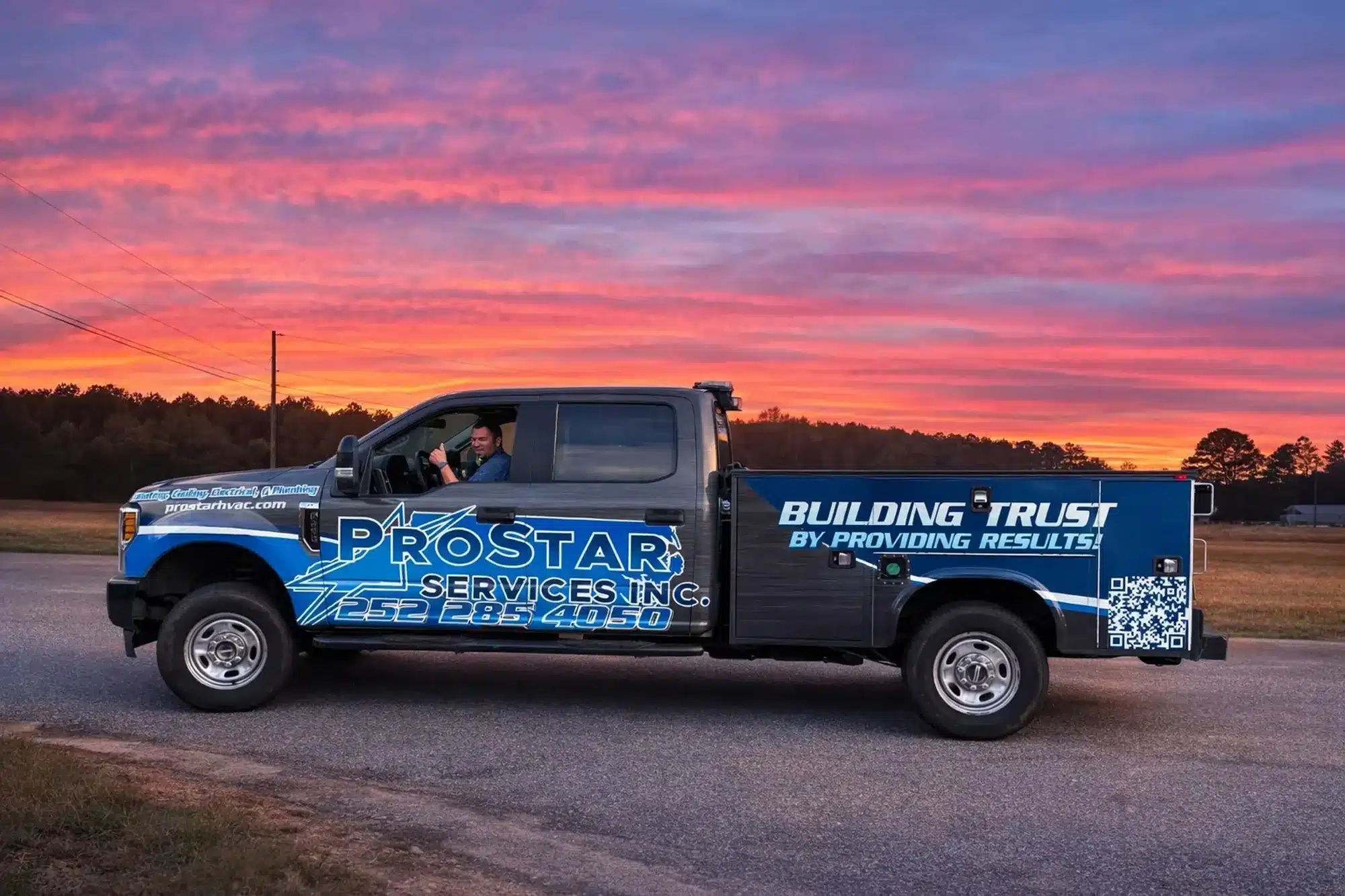

Your AC quits on the hottest day of the year. The water heater starts leaking on a Sunday morning. The breaker panel trips and won’t reset. Whatever’s going on, you need someone who actually knows what they’re doing and shows up ready to fix it.
Prostar Services handles heating, cooling, plumbing, and electrical for homeowners across Wilson and the surrounding area. From water heater replacements and drain cleaning to heat pump installs and panel upgrades, we’ve got the crew and the credentials to get it done right. Give us a call and let’s take it from there.
Book OnlineFor Seniors, Military, Veterans, and First Responders
Expires 10/31/26.
When You Join Our All-Star Membership
Catch problems before they become expensive

Our trucks are fully stocked so we can handle 99% of repairs on the first visit. You get your problem solved and your day back.
Our technicians are NATE-certified and continuously trained. You’re not getting someone who’s figuring it out on your equipment.
Manufacturer warranties can be voided by improper maintenance. Having a certified Prostar tech service your system keeps your coverage intact and your equipment running the way it should.

Jamie and Brett did an excellent job of installing my furnace. Very professional .Great job Prostar

Terrance is superior Hvac tech..He is very polite and very efficient and effective...I would rate him on a10 scale. 10

Jamie and Brett were fantastic.

Terrance came out to service my unit and was very polite and informative. He displayed extensive knowledge of the systems and industry and recommended what he felt was necessary. I would definitely recommend requesting him as a technician on your next service.

Jamie and Brett were professional and courteous and so so friendly. They are fabulous team to work with and truly grateful of the A+ service The most I appreciate was he explained the work to my understanding too.

Jamie & Brett did an amazing job on my humidifier

Terrance was very intelligent and knew his job very well and was exceptionally respectful and we'll look forward to seeing him again!!!

Jamie and terrance did a top notch job and will definitely recommend them to others

Jamie and Brett were great installers, highly recommended!!!!!!!!
Jamie and Brett did an excellent job of installing my furnace. Very professional .Great job Prostar
Terrance is superior Hvac tech..He is very polite and very efficient and effective...I would rate him on a10 scale. 10
Jamie and Brett were fantastic.
Terrance came out to service my unit and was very polite and informative. He displayed extensive knowledge of the systems and industry and recommended what he felt was necessary. I would definitely recommend requesting him as a technician on your next service.
Jamie and Brett were professional and courteous and so so friendly. They are fabulous team to work with and truly grateful of the A+ service The most I appreciate was he explained the work to my understanding too.
Jamie & Brett did an amazing job on my humidifier
Terrance was very intelligent and knew his job very well and was exceptionally respectful and we'll look forward to seeing him again!!!
Jamie and terrance did a top notch job and will definitely recommend them to others
Jamie and Brett were great installers, highly recommended!!!!!!!!
Ready to get something scheduled? Call us or book online and we’ll get you sorted ASAP!
We’re based in Wilson, but we cover a lot of ground. Take a look and see if we serve your neck of the woods.
 All Service Areas
Through PowerPay, you can get approved for up to $100,000 in home improvement financing, fast, with no hidden fees and no prepayment penalties. The details are worth a look.
The Prostar All-Star Membership keeps your HVAC and plumbing running right all year long, with two seasonal tune-ups, a whole-home plumbing inspection, priority scheduling, and 10% off repairs whenever you need them.
It’s the kind of coverage that pays for itself the first time something goes sideways, and the peace of mind that comes with knowing we’ve already checked everything out.
Join Now


Prostar is growing fast, and we’re always looking for technicians and tradespeople who take their work seriously. We invest in our team with ongoing training, real certifications, and a culture built around doing things right.
If you’re good at what you do and want to work somewhere that actually notices, come talk to us.
Apply Online